Trans women in sports
Hi, Sam.
Hi, Hannah.
Hi, Morgan. Hi.
We have a guest today. Morgan.
Who are you?
Hi, I'm Morgan Boecher
he or they pronouns.
And I'm a lover of this podcast.
And a dear friend of it as well. Yeah.
Morgan and I went to college together
where I was a terrible employee of his.
And then we made actual friends
once we were adults.
And I was a responsible employee.
I did help you carry some pizza
in one time.
That was very valuable.
Right after my top surgery.
So it was necessary
and a very kind gesture.
Morgan has a lot of expertise,
but he comes to us today
mainly as a trans person.
Happy to be here as such.
No pressure. But you're speaking
for all the trans people
I feel comfortable with
all of this and very qualified.
Morgan also comes to us as a twice
published graphic novelist.
Yeah, well about to be.
My second book, it's a graphic novel,
it launches one week from tomorrow.
Yay! Which, if you're hearing this,
the book will already be out.
So you can rush to the bookstore
right when you finish listening to this
and you can grab your copy of...
Chicken Heart!
And it's about a trans stand up comedian
who's closeted
and gets to explore his identity
by traveling to an upstate woodland
commune built to protect trans people.
It's great.
And I have to read it again and actually
pay attention to the art in it.
But it made me feel a lot of feelings.
It made me identify with a character
who has a life experience
that I don't have.
I'm really happy to hear that.
That was the point.
But today
we're going to talk about something
tangentially related to Chicken Heart.
Today we are talking about everyone's
favorite boogeyman of the day
transgender women in sports.
I'm not frightened.
I think the spoiler here is that
we're all fine with trans
women and girls playing sports.
That's not the conclusion
that we're going to reach.
That's our stance
heading into this conversation.
So if you're looking for a measured debate
about whether trans women
should be allowed to kick balls,
you're not going to get it here.
So trans women in sports is a big freaking
deal lately for reasons
that don't make any logical sense.
Since 2020, 27 states have passed
legislation banning trans girls and women
from participating in sports
at the K through 12 and collegiate levels.
It is not true that in all 27 of
those states, you cannot compete in sports
at the K through 12 or collegiate levels
if you are a trans woman or girl.
A lot of them are currently blocked
by court orders.
But it's just in the past five years,
there's been an avalanche of these laws
being passed.
In addition
to that, the NCAA in February 2025
updated its policy
on trans participation in sports.
This was in response
to an executive order.
Executive order 14201
from the Trump administration,
titled Keeping Men Out of Women's Sports.
And the Executive order is, like,
incredibly inflammatory.
We're not going to look at it.
We're just going to talk about what
the NCAA a policy is
and what the NCAA policy is now is that
trans women can participate in women's
sports only at practice, meaning
that they also can participate in what
the NCAA describes
as the benefits of being part of the team.
I assume that means, you know,
you go to like team building activities,
you get your jersey, you get supportive
healthcare, which I assume
means like you get, you know, an ice pack
and an Ace bandage...
Athletic trainers probably. Oh, really?
Oh that's much more high tech
than what I was thinking.
But they may not compete.
And trans men meanwhile may compete
on women's or men's team as they see fit,
but need to complete a medical exemption
process if they take testosterone.
And as for nonbinary people, it's
that if you are AFAB,
you can participate in women's
or men's sports, and if you are AMAB,
you can compete in men's sports only.
Assigned Female At Birth and Assigned
Male At Birth.
That's what those mean!
Cis-woman
and a trans man would both be AFAB
because when they were born
the doctor said, “That's a girl cuz
I'm looking at a vagina.” “That's
the size of it.” “That's the size...”
So that was a recent development.
From 2022
to 2025 The policy on trans participation
in NCAA sports was different.
It was modeled after Olympics rules
and it varied by sport,
trans women and AMAB people.
So like I guess non-binary AMAB people
who would prefer to compete on the women's
sports team would have to prove
that they had been on HRT
for a certain amount of time
and submit to testosterone level tests,
whereas trans men generally could join
the men's team whenever
and compete on the women's team
only as long as they had
like low enough testosterone levels
and different sports had different rules.
I think the most recent Olympic update
came in 2015.
As far as like specific measurement
levels.
I think their stance more generally
has become that they recommend
individual sports federations decide
what testosterone level
is appropriate for trans women's
participation in women's sports.
And the NCAA AA in all of their language
releasing this new policy talked about,
you know, they didn't
admit that they were doing this
in response to the executive order.
They said they wanted
to adopt a fairer policy by adopting
one policy that would be applicable across
all sports.
So I want to kick it to you guys.
As you can probably guess, my answer
to this based on my tone.
Does it seem fairer to have one uniform
policy across all sports,
from gymnastics
to rugby to swimming to beach volleyball?
All sports are the same, so I don't see
why you would need different policies.
And I think that starts to get into
what I'm sure we will talk about more,
which is we're seeing kind of
the logical breakdown
of this strict male-female division.
Which I think we could also point
to the fact that like that
division has always had its issues.
Yeah, I think like everyone in this room,
especially Jade,
because she is like a hardcore
radical feminist, would agree that
the idea that there are two discrete
sex categories is pretty bunk.
So it's always been problematic,
I think, to divide up sports.
This way.
It would be problematic,
I think also to not have any kind
of tracking or differentiation
based on like height
and weight differences
or hormonal differences,
but I think trying to split it into men
and women also doesn't make sense.
No, and it's a red flag whenever people
try to make simple out of the complexity
of reality, they're trying to go
in a simpler direction.
Whereas what would really control
different variables
and make competition more fair is to like,
embrace the complexity
and to account for all the variation
across bodies
and sports and abilities.
Something that I've learned from
para climbing
is there's a way to do that
where you are un-defensively,
treating it as a process
that doesn't have a perfect destination.
In para climbing, there are categories
based on different disabilities
and different levels within each category
depending on level of impairment.
They're constantly revamping these based
on what they learn from the athletes.
And we talk a lot about it's inherently
unfair to try to classify disabled people.
So Hannah, you won.
Congratulations.
A competition in rock climbing.
An endurance competition.
An endurance competition okay. Not skill.
There was a...
Actually no,
there was a skill component to it.
You got more points
if you climbed more difficult routes.
That's true.
Sam and I, we recently did a fundraiser
for one of my para climbing groups,
and it was like an all night
climb-a-thon endurance competition.
What they did was they had people register
and they said, you know,
are you a beginner,
intermediate or advanced climber?
And are you a para climber
or a non-disabled climber?
And, you know, based on
how many people registered
would have split it up
into different levels of groups.
So like they ended up collapsing
all of the para climbers together
because they simply didn't
have enough for it
to be like an actual competition between
beginner, intermediate and advanced.
And then for the non-disabled climbers,
they separated them out into beginner,
intermediate and advanced.
And depending on which level
you put yourself
in, you got a certain amount of points
per route
that you climb depending on the grade,
like the difficulty grade of the route.
And yeah, it wasn't gendered
They had like a schema for it
before we went into the competition.
And then they adjusted
based on who actually enrolled.
So it's just to say that there are lots
of different models for this.
Yeah.
The stark, black and white, man-woman
one seems particularly hierarchical.
Yeah.
And like like hierarchical
and also like trying to put
a mold
on reality that reality doesn't fit.
While at the same time
saying it's objective reality
that there are two sexes.
Right. Yeah. Yeah.
And there's winners and losers
in that dichotomy.
By design. Right.
And that's the other thing
that we can get into later
is women's
sports get shortchanged a great deal.
And there are a lot of inequities.
So okay you guys want some more facts.
Les go.
So 27 states right.
Executive order coming from
the highest office in the country.
Complete revamping of the NCAA's policies.
Meanwhile how many trans athletes actually
are there competing?
The president of the NCAA recently
told Congress
that of the 500,000 college
athletes in the country,
less than ten are trans,
and they're not all trans women.
What? Yes.
As far as we know.
Right.
Because we're not like examining
people's genitals
when they sign up for college sports.
So sweeping national policy
change for fewer than ten people, maybe.
It's proportionate Morgan!
Meanwhile, in k-through-12 schools,
fewer than 2%, that is between 1.4
and 1.8% of youth between the ages of 13
to 17 self-identify as trans.
And among those youth,
they are underrepresented in sports.
So about 40% of trans
youth might play on a sport team like that
includes nonbinary
youth, trans boys and trans girls.
So like a fraction of a fraction
are actually trans girls.
So according to an article
that I looked up on US News,
less than half of 1% of high school
athletes are trans.
This was out of 2023.
So big reaction
to a very small population.
Despite that, big splashy
controversies have been in the news
and on social media.
And, you know,
we're a bunch of friends having fun.
So we're not going to be quoting
any hateful rhetoric right now
or getting into like gross commentary,
but we are going to look
at a couple of examples
because I think that they are elucidating.
I was originally going
to research this example,
and then I realized that I'm not Robert
from Behind the Bastards.
And I don't know how to research
an individual person's life to a degree
that I can make it interesting.
But this is Leah Thomas and Riley Gaines.
Leah Thomas is a trans swimmer.
She was a college swimmer.
She competed first on the men's team.
Transitioned.
She had been on HRT
for the required amount of time to compete
on the women's team.
And there's data. You can look it up.
Her swimming times got slower.
She lost a lot to cis-women because
you don't win your sport all the time.
And in this particular race,
she was racing against Riley
games in the 200 yard freestyle.
This was in March of 2022
and the two swimmers tied for fifth place.
They didn't have two fifth place trophies.
They gave Thomas the fifth place won, and
they gave Gaines the sixth place trophy.
And out of this, Gaines has made an entire
ass career bitching about this race.
You were talking to your parents
about trans women in sports.
You were doing some deep canvasing.
You said that you and your parents
had all agreed that, like, while
there are some fairness issues to address,
that trans people are not the problem.
And I said I would take it
even further than that.
I think that the entire question
is an overblown piece of bullshit.
And we looked up Leah Thomas.
That was when I think we both first
found out about what the NCAA policy was
before the executive order,
that you had to have been on HRT
for a certain amount of time
before you could switch teams.
And that was also
when we found out how overblown the race
was, that that was a tie for fifth place.
And it just goes to show
this kind of game of telephone
that happens
with the sensationalized story,
because I think that you had just a vague
impression of this swimmer.
Right? Yeah.
Right.
And yeah, I think again, when you put it
in perspective of, like you said, ten
people out of 500,000
athletes at the college level,
the level of outrage against it
from certain
people is not in proportion...
There's more going on here
than just a question of fairness.
And I think that really seeps over a lot
into this vilification of trans women.
Yeah,
I think a lot of perfectly well-meaning
people have an idea in their head
that they hear the name
Leah Thomas and they think, oh,
she like, kicked
everyone's ass at swimming.
No, she tied for fifth place.
Because the stories
get so sensationalized and
and reported in vague terms
and you hear, you know, sound bites
or you hear somebody talking
about a sound bite that they heard.
And Riley Gaines,
I think is a really interesting example
of the right wing grift about this.
I mean, it's easy to have a scapegoat
when you have that vilification, when,
you know,
these stories
get sensationalized and passed around,
and then people make these simplified
connections over.
“Oh, well,
yeah. Like that doesn't sound fair.
That trans people are taking hormones
and that, you know,
obviously gives an edge and da da da da”
but right when A) the stories themselves
are not aligning with the reality
but also B) the, the systems themselves
not making sense with reality
either, as valid ways
to rank people in competition.
Or maybe like just not even understanding,
like how transitioning works.
You just said that, “Oh, trans
people are taking hormones
and that's not fair.” Like,
I wonder whether a lot of the people
who are worried about fairness in women's
sports know the basics about like
when you transition
in a trans feminine direction,
what you're doing is taking estrogen
and suppressing your testosterone.
That’s right. Right.
Like when you're transitioning in a FTM
direction,
what you're doing is taking testosterone.
And I feel like there's an idea
that some people have
that when you're trans,
all you do is socially transition.
And it has always been that you can just
socially transition and immediately
start competing in women's sport.
Right. Which has never been the case.
And I'm not saying that
like the way that it was
before was perfect,
but that's never happened.
Yeah, that's very much the way
that it gets framed by the right wing is,
these people are losing in male sports,
so they're making the decision
to transition
so that they can compete in female sports.
Because that's the easier path. Yeah.
Can you imagine?
Like I want to win at swimming so badly
I'm going to inject myself with hormones
every what week?
Month? I'm going to get a new passport...
Put everything at risk, too,
because when you transition
you put everything at risk.
Nobody knows what they're going
to have left after coming out.
Friends I expected to have still, once
I came out, I didn't have.
And then, you know, other relatives
I was afraid to come out to ended up being
some of the most supportive ones,
but I've met people, like through support
groups and conventions
who've lost so much,
lost jobs and housing and family
and all kinds of relationships.
And it shouldn't be that way.
But I feel like the fact that it is
that way is so illustrative
of the fact that it's not something you do
unless you need to do it.
Absolutely. Oh my gosh.
My big delay in coming out was denial
because I couldn't
envision a life after transitioning.
I couldn't picture you know, how
I could have a good, normal, livable life.
And it took me meeting other trans people
and hearing their stories
and seeing them online to understand,
oh, this is something I can do.
It's still horrifying
because everything's at stake,
and I don't know what's going to be left
after I go through this.
So many forces, almost like against you.
People hating you for no reason at all,
just like before they've ever met me.
They hate me. Riley Gaines! Exactly.
There's just so much variability
in transition itself.
Yeah.
Some people take hormones once a week.
Sometimes it's the shot, sometimes it's
a patch, sometimes it's a couple weeks.
This assumption that, okay,
you're one day a man, now you're a woman.
Just the snap of the fingers.
No, this process takes years.
It'd be great
if it was the other way, though.
That would be convenient.
Can we come up with that?
Hey, Sam, can you make that drug?
I don't know
if I'm the most qualified person for that.
You're the most qualified person here.
Unless Jade has a medical degree
that I don't know about.
It's up to you, Sam.
I thought you were an ally Sam!
There's another example
that I wanted to bring up to you guys,
because I think it's
a really elucidating one.
This was in the 2024 Olympics,
and there was a boxer.
I might butcher
the pronunciation of her name.
I'm so sorry. Imane Khelif?
She is a boxer.
She’s cis, and she made headlines just
for appearing insufficiently feminine.
And I wanted to bring it up
because it's an example of how
these policies
banning trans women end up harming
just anyone gender non-conforming,
including like butch cis-women
and any AFAB
people who don't perform womanhood
sufficiently for this specific ideal,
which is going to be a lot of athletes,
because athletics are a lot of the time
about who's the biggest and the strongest.
I know when I heard about it
that it kind of dives into this territory
of trans-vestigating,
where it's like trans or cis person
people are diving into
their personal lives
to try and find this out,
all in the effort of supposedly fairness.
We gotta make sure we know who the trans
people are, I guess is the logic of it
all, but it really just seems like it's
another iteration of...
Investment in essentializing maybe?
I can always tell that
I don't have to worry
that maybe
another version of gender is truthful.
It is inherently Like it
can't not be transphobic.
In the same way
that so much homophobia of the early 2000s
and earlier than that was about trying
to identify who the gay people were.
Oh yeah, it's
like kind of like McCarthyism.
Yeah and if you don't comply,
then you are under suspicion.
Right.
It makes me think about Christy Martin,
the boxer.
I saw a film that Sydney Sweeney recently
played her in, and it's a true story
that follows Christy,
who was this outstanding boxer,
and she was abused,
and she narrowly survived
murder from her coach and husband,
and he coached her look as well.
And, you know,
she would wear these pink hyper femme
boxing shorts and outfits and...
This whole thing smacks of gender!
It so does.
And to have it
so closely tied to domestic violence.
Yeah.
It's just such a clear thread to me
that being shoved
into a gendered box for performance
because there's performance too,
her being in the ring is...
Well it's kind of like,
it is incumbent upon you to compensate
for your participation in a combat sport
which is undesirably masculine.
So you must perform extra femininity.
It's kind of like trad wife influencers,
how they have to cover up for
the fact that they are making
a lot of the money for their household
by performing extra subservience
and hyper femininity to their husbands.
Completely.
Yeah, they have to like, balance
the scales and be like,
I'm not undermining
or emasculating my husband.
Like that all goes to him,
even though I'm the breadwinner here.
So the thing about Imane Khelif
is that she is Algerian.
And for certain women of color,
that target of compensatory
femininity is just vanishingly distant.
It can't be done because ideal femininity
is white femininity.
Right?
And so these trans-vestigations,
they tend to harm women of color the most.
And that sucks. Yeah it does.
We've established that there are big,
splashy, sensationalist controversies.
We've established that there have been
major legislative pushes
and an overhauling of NCAA policy
and an entire fucking executive order
coming from the Oval Office
over a tiny, tiny group of athletes.
What is going on here?
I think what is going on
here is a moral panic.
So this was a term coined by Stanley Cohen
in a 1972
sociology
text called Folk Devils and Moral Panics.
Five Stages of a moral panic, here we go.
An event, episode, person
or group of persons is perceived
and defined as a threat
to societal values, safety, and interests.
So maybe there's been like
some kind of social change.
I will say a threat to societal values
could be really good.
Sure,
when the societal values are dumb and bad.
A lot of societal values are dumb and bad,
and we should threaten them.
But a threat is made
or a perceived threat,
perhaps not even an actual threat, right?
Because I would say the OG
moral panic would be anti-Semitism
and The Protocols
of the Elders of Zion and stuff.
And if there is a meeting
where we're deciding
what happens in the world,
I was not invited to it.
I don't think it's real.
So it could be drummed up.
It could be an actual threat
to societal values.
For example, another go to example
of a quintessential moral panic
is the satanic panic
about daycare workers in the 70s and 80s.
But the threat that was happening
was women working outside the home.
It was a threat to the family structure
where the woman
stays in the domestic sphere
and the man is the breadwinner.
But the threat that was identified
and perceived was daycare workers.
The nature of these apparent
threats are amplified by mass media,
who present the supposed threat
through simplistic symbolic rhetoric.
Portrayals appear to public prejudices,
creating an evil in need of social control
and victims: the moral majority.
So when I think of the victims
of a moral panic and the moral majority,
I just think of Reverend Lovejoy's
wife in The Simpsons
going, “Won’t somebody please
think of the children.” Perfect image.
Yeah.
Okay.
Stage three: A sense of social anxiety
and concern among the public
is aroused through these symbolic
representations of the threat.
So I wanted to emphasize here
symbolic representations
harkening back to Imane Khelif.
It doesn't matter that she's cis.
She represents a threat
to traditional gender expression
because she looks too mannish or whatever.
And so it's it's all about these symbols.
The next stage gatekeepers of morality
(editors,
religious leaders
and politicians) respond to the threat.
Experts pronounce
their diagnoses and solutions,
which include new laws and policies.
This is legitimized by the media.
So you think of like the spate
of anti-trans editorials
and coverage in the New York Times
that we've seen over the past two years.
Unhelpful. Unhelpful.
And then the last stage
is that the moral panic dies down.
The debunking never makes
as big of headlines as the initial panic.
No, it's not as exciting
when something peters out
because it doesn't have any attachment
to reality like an actual threat.
Yeah.
So other examples of moral panics:
DND is Satanism,
heavy metal is Satanism,
Satanic ritual abuse in daycares,
old school anti-Semitism,
and radical gender ideology.
It's interesting
that you mentioned the Satanism part,
because I think a lot of moral panics
have that going-against-the-Bible
kind of thing.
And I feel like a similar
vein of homophobia, transphobia
comes close to that in the sense that it's
going against what is natural to God.
Yeah, and there's a lot of anxiety
about the children.
Right. Right. Old school homophobia.
I feel like people
kind of forget about this now,
because gay
and lesbian identities are a little bit
more mainstream and,
you know, family friendly.
But when we all were growing up,
it was there was this incredible
anxiety about gay people
recruiting children.
Being pedophiles. And being
pedophiles.
And it's the exact same rhetoric
that we're hearing about trans people now
and drag queens and stuff.
Or even just confusing kids like,
I've heard adults
throw that out there as a worry, and...
Which is hilarious when you see, like,
the ways that straight
cis people talk about their babies.
For example. Right?
Put a baby in a onesie
that's just like Lady Killer.
Yeah. That's weird.
It's weird.
And truly, kids are going to be fine
with whatever you're fine with.
If you're explaining, “Oh, being trans
or gay or queer is just another way
to be a person in the world.”
They're going to go, “Oh, okay,”
because they don't know reality yet.
They're learning it from the adults.
I also feel like the anxiety
about children being confused..
In that imagination
the worst thing that could happen
is that a kid says, “I
think I actually might not be a girl,
I think I might be a boy.”
And then they get a haircut
and some new clothes,
maybe go by a new name for a while,
and then they're like, “No, actually,
I'm a girl.” And go back to being - like,
why is that calamitous?
Why is it a problem? Like that seems fine.
My niece wants to be Snoopy all the time.
Yeah,
nobody’s up in arms about that. Yeah.
And for the kids who are trans,
it makes a world of difference. Yes.
The single thing that would have made
the greatest difference in my life
is information earlier that, “Hey,
here's
what it is to be trans and it's okay.
And there's love and support
for you out there too.” And without that
it delayed me years and years
until I was basically done with college.
And I was still terrified to come out
and didn't have the resources.
I hate that for you.
It was hard.
I had to write books about it.
You know, they're really good though.
Yeah.
Oh, actually, can I tell you
my very first memory of you Morgan?
Please.
We were in New College Feminist Alliance.
Of which I was the president.
Of which you were the president,
and you were in your transition...
I don't remember if you introduced
yourself as non-binary or a man.
Probably a man.
And you talked about anxiety over
whether you would still be
welcome in that space and whether you were
still like, legitimately a feminist.
Sure. That was challenged.
I had to move out of the household
I was living in at the time.
No shit. That's sucks.
Yeah, because it was perceived
that I was rejecting womanhood.
And I mean.. Not at scale! Not
at scale.
But, you know, I didn't have the language
to understand myself
or explain myself either.
And it was a mess.
Yeah. That's awful.
And I think coming
from the more conservative background
that I did a thing that I hear
a lot from friends and family is kind of
echoing that confusion that you spoke of
is they'll say things like,
“Well, so is a trans woman mean
they're a man who became a woman
or a woman who became a man?” They're
confused about what even the basics mean.
Right, which is understandable.
But then their response to that is,
“Well, this is why it's just simpler
to have male female.”
It kind of sidesteps the entire discussion
that's being had in the first place,
which is the ability for people to exist
in the space and mindset and body
that they feel comfortable with.
I also feel like as someone who spent
a lot of time being a clueless cis-person
and will undoubtedly continue
to be a clueless cis-person
a lot of the time, the big ‘Aha’ moment
for me was when I stopped trying
to conceptualize transness,
or I should say, when I stopped trying
to empathize with transness by imagining
transitioning, and instead by imagining
that I had been assigned male at birth.
Yeah, I think that's an easier way in.
It's a much easier way in, and it's not
how people approach it a lot of the time.
That speaks volumes
because I think that is exactly where
a lot of people are approaching it
of “Well, wouldn't it be so weird
if I just all of a sudden took up life
as a woman?” Yeah, it would because..
Whereas, like, if you are actually trans,
you might be more like, “Wouldn’t
it be so weird if I just, like, took up
life as a woman?” Yeah, see what happens.
Try some sports next [laughter]
But yeah, we're so capable of
holding complexity and multiple categories
and different ideas.
And if we just started out
opening up the gender
categories, people
wouldn't have to try to empathize.
It would just be like, “Okay,
a woman's a possible thing.
A man's a possible thing.
Genderqueer is a possible thing.
Changing your mind is a possible thing,
like fluidity is possible.”
And to just be able to hold all of that
from the get go...
Yeah, you wouldn't have to, as an adult,
learn that there are different ways
of being besides cis binary.
And yet after people learn these stark
black and white categories
and live with them
for a lot of their life, I can understand
it being hard to put on the brakes
and open those categories up
and try to understand something different,
different kinds of pronouns.
And you know this person
you've known all their life
and now their pronouns are different.
And why that's hard
to make that mental switch and why
early information is so important too,
because it makes the switches easier
or not even necessary.
The earlier on that you can learn about
and conceptualize,
you know, the broad, beautiful spectrum
of possibility when it comes to gender,
the less that learning about these things
later
on will register
as a threat to your own gender.
Exactly.
I feel like so much of cis panic,
you know, “If someone else can be trans
does, does that mean that my womanhood
actually doesn't
have anything to do with my boobs?”
And it's like, “No,
your womanhood can be about your boobs.
That's fine!” “It's fine.
We don't need to touch your womanhood.
You do you.” “You do you.
You can have your womanhood over there.”
But who does it threaten?
There is a power structure at play,
and I think this is kind of like
speaking to that piece of like,
how does this add up that we're
we have this national conversation
over less than ten people.
So that's the next thing
that I have written down in my handy dandy
notebook here.
The trans in sports
moral panic is invested
not in protecting women and girls, but
in protecting traditional gender roles.
Here's
a little factoid that I got from GLAAD.
We love GLAAD.
So it was originally founded in 1985
as the Gay and Lesbian Alliance
Against Defamation.
Now they just call themselves GLAAD
because they're also about trans stuff.
Yeah, they're pro LGBTQ.
They have a fact sheet about this that
I would encourage anyone to check out.
It was like a fact sheet for journalists
to refer to.
And they cited research: states
that ban trans participation in sports
have fewer girls competing in sports
than states that don't
ban trans participation in sports.
I feel like that's
so telling that all of this rhetoric
is “Protect women
in sports, protect girls in sports,”
and that it distracts
from the other conditions
that lead to women and girls sports
having resources or not.
Because if a location has generally
like socially progressive values,
there will be more investment in women
and girls sports because women and girls
sports kind of transgresses
traditional gender roles a little bit.
Yeah.
The big picture in my opinion here: trans
people are a group that have existed
very much at the margins of society
for a long time,
and in particular in the trans
in sports debate.
There are just so few trans athletes.
It's just that if you think of
like a marginal group, like a tiny group
that exists at the margins of a community,
trans athletes are a great example
because they're such a tiny percentage
of the athletes overall.
And when we think of the LGBT
rights movement over the past 50 years,
you know, we remember the fight
for marriage equality
and trans rights
kind of taking a backseat for a while.
You can look up a lot of statistics
about trans people.
Oh, and I should say, like, despite that,
that trans
people have always been at the forefront
of queer liberation movements.
But trans people are more likely
to experience homelessness,
violence, job
and housing discrimination, etc.
than gay and lesbian cis people
and and than a lot of other people.
And if you look up those stats,
they're staggering.
I think that this is
part of the process of fascism.
You pick a really marginalized group
that's really populationally
small and fixate on it and panic about it.
And you wrap it up in reasonable
sounding rhetoric, in this case,
about protecting women and girls.
And you're kind of running a beta test
for how you can try
to legislate
a group of people out of existence.
This moral panic about trans people
in sports, it's not existing in a vacuum.
It exists alongside moral panics
about bathrooms,
about gender affirming care for kids.
And it's all part of this
kind of incremental plan, right?
Pick a group at the margins of society
or and pick an issue
that seems trivial or reasonable
and use that as your beta test,
and then you keep on expanding from there.
I think all of the ways
that we talk about gender affirming health
care or sports
participation for trans people,
they're going to use that same logic
to start targeting gay people next.
Completely. Completely.
And the reason that it works is because
the marginalized community is so small
that the people in charge
can bank on the fact that there's
a significant part of the population
that don't know a trans person
or don't know a member
of the marginalized community,
and therefore it's a concept to them.
It's not a person.
Yeah, they're easy to other.
They're easy to dehumanize.
And I feel like that that shows so much
in the way that a lot of people will talk
about this, that they won't say
trans people, they'll say the trans issue
or the fairness in sports debate,
or the trans in sports
debate instead of the trans
women in sports debate.
Language is powerful.
Language is powerful, and trans people.
I feel like
this is completely observational.
I have no research backing this up,
but it seems to me that trans people
are discussed as a question or as an issue
instead of a group of people.
And yeah, that's the process of fascism
is you identify
a group of undesirables,
you use them as a scapegoat for everything
that's wrong,
and you legislate them out of existence
or expel them, and then you keep on doing
that.
First they came for the trade unionists,
and I didn't speak up
because I was not a trade unionist.
Then they came for the Jews, and I did
not speak up because I was not a Jew.
And then they came..
They're coming for you.
They're coming for you next,
because they always need more scapegoats.
And now I'm getting tinfoil hat,
but they always need more scapegoats,
because expelling enough
undesirables will never fix
the social problems that the undesirables
are being blamed for.
Yeah, absolutely.
And it keeps everybody distracted
from the powers that be so
they can stay in power and afraid of them.
Yeah.
Because of the McCarthyism pattern
that you were talking about earlier.
So knowing that we need to be selective
about how we engage with this,
and this is part of why I wanted to start
this episode of our podcast by saying
we're not going to have a good faith
debate about this
because it's not an actual good faith
debate.
Right?
It's not like a reasonable conversation
to have.
It's not an actual good faith debate.
At the same time,
we don't want to alienate people
who simply don't know and to who might
hear conversation about it
and think, “Well, it's a good question.
Testosterone
does give you an advantage on the field.
So what is to be done about that?” On its
face, that can sound reasonable, right?
So what do we do?
How do we talk about this?
How can we be
effective change makers about this?
My very first thought was this old
antifascist slogan from Latin America,
which translates to “no one
lets go of anyone's hand.”
You cannot let this dehumanization
reach any group, no matter how marginal.
You cannot let it creep into normalcy
because it's a toe in the door.
Well, also
because it should never happen to anyone.
Yeah, it's just wrong. It's just wrong.
And then
my second thought was storytelling.
And that was in particular
why I wanted to talk to you
about this, Morgan,
because you are a storyteller.
Well, thanks, Hannah.
So, yeah.
What are your thoughts about, like,
storytelling as an avenue for trans
liberation?
I'm also an arts worker by day,
so I am fully behind the power of arts
and culture and language
and bringing us together
and humanizing each other
and learning from each other.
And like I mentioned earlier,
speaking personally, information
would have made all the difference
in my life if I had received more stories
about trans people and positive outcomes
without shying away from the anxieties
and the loss and the realities
of what it is to be trans in this world,
that would have helped me
come out sooner,
perhaps to find strong resources earlier.
And it was actually first
seeing other trans people on YouTube,
where I first realized, “Oh,
I see myself in them, like
I can actually do this.”
And because when I first
came out to myself, I came out as a man.
I didn't even come out as trans
because trans, in
my mind,
was A) something too terrifying to be.
Because how do I even begin
to live as a trans person?
It's always sounded so scary.
And then B)...
And you do it
so well. Well, I'm happy about it now.
I'm real good at being trans. No.
Yeah. No, I mean, I love it.
It's a It's a wonderful life now, but it's
when I first came out it felt
I had this image of my humanity,
my life being this glass vase
that I lifted above my head and smashed.
And, you know, the act of coming out
and transitioning was trying
to find all those pieces. Will
I still have friends.
Will I still have the family piece.
Can I have a career?
Can I live where I want to live?
Can I have the love I want to have?
And I kind of like thought about my life
since then, kind of testing, like, okay,
I'm able to get this job
and work in his career
I want to and I'm able to, you know,
move to the city I want to live in.
But even that is it's a narrative
that is it's built on..
in a cis paradigm.
Because where I succeeded in my career,
there weren't other trans people around.
And I became isolated through that
and it started to dawn on me
after years in that environment,
you know, a very supportive,
you know, trans friendly environment.
But just completely cis.
I came to realize, no, I do need to be
around, around trans people.
I would go to an event once a year called
the Philadelphia Trans Health Conference.
That was my one time in the whole year
where I was around more trans
people than not.
And..
It’s also the reason why most of the trans
people I know know each other.
Yeah, it is a magical, wonderful,
and it's a shame
that it doesn't happen in person
any longer.
But it was such a wonderful resource.
You have told me this before
and I know what you mean so much more
now than I did
then having found para climbing.
Sure.
I didn't realize that
there was a little part of me
that was shriveling on the vine.
Yeah, until I started to be in a room
with a bunch of other
physically disabled people.
Yeah, it makes a huge difference. Yeah.
Just breathing that air of your community.
Yeah. And it's just like a layer removed.
You can be understood
in a way that you're not necessarily
in just regular daily life
or for me, in regular cis world.
And, granted, my cis world, like I love
all of the cis people in my life
and they're in my life
because I choose that.
And you're sitting in your friend's
living room.
We made a joke about it, but you are here
being the voice of the trans community.
All of them.
Right?
Like that's exhausting,
if that's all there is.
That's the word. It's
just exhausting. Yeah.
And so it's a relief to, yeah,
be breathing that air of my community.
Like I would go to queer and trans yoga
once a week.
And that was my moment to breathe that air
and just relax and understand
that I'm understood here on another level
where I don't have to explain myself,
even if I don't speak to anybody else
in the room. Yeah.
And it makes a difference.
And it's it's beautiful to have that.
And it should be available to everybody
who needs it,
whatever
their version of that community is.
I think it's actually the best case
scenario that we trans more kids.
Not that you can trans a person,
but you know, that was a joke.
More trans people is a good outcome.
Yeah. No,
that was something I was thinking about.
We kept repeating the statistics of,
you know, ten people out of 500,000
college athletes, but I don't know...
I would love for this
to be a much bigger problem.
Well, or just, you know,
I imagine that of that
499,990 people that are remaining, there's
probably a couple that might be trans
that haven't come out yet.
Absolutely. Plenty. Plenty.
Plenty of them. Yeah.
Yeah.
And I would love to see them thrive.
Exactly.
Yeah.
Breathe that in and to feel understood.
I also find that I can be challenged
much more now.
They can challenge me in a way
that my non-disabled loved ones
can't because my knee jerk
reflex will be, “You don't get it.”
You know what I mean?
There's a defensiveness there.
There's a defensiveness that I don't think
I think i’m correct when I..
Sure!
yeah, yeah, they don't get it.
[laughter]
But coming from somebody who does get it
and looks at things differently from me,
that's been really eye opening
and being able to be challenged
when you're emotionally safe
and physically safe,
because i’m talking about rock
climbing, is a great way
to grow. Completely.
We only get that from plugging
into our community.
Yeah, from being seen
and being known as “Well
this is what a disabled person
is going to want to hear, or how you know
they're going to want to be challenged
in this space.” Yeah.
And it's a it's humanizing to have
that, it's humanizing to feel that.
And coming back to your question
about stories,
I think it's humanizing
to see ourselves in stories.
And yes, it's wonderful
to learn about other lives as well.
The books I wrote
are the books that would have helped me
if I had encountered them earlier.
And while I wasn't about to get on YouTube
in front of a camera
because I was afraid of that,
I could make a webcomic.
And that's where What's Normal Anyway
came from, which was a weekly comic strip
that I created over the course of three
and a half years, and that became a book.
And it was a wonderful way
to connect with people.
And some of the best comments I ever
heard were from people who were
“I just needed to laugh today,
and this gave me that.” Or, “I thought I
was the only person on the planet
who had these feelings and these fears,”
and that, I mean, that's that's it. That's
if I get no other
success in life,
I think I've still made it.
Yeah, that's the big one.
Yeah.
If storytelling weren't
incredibly powerful and impactful
for like, change making, then
there wouldn't be all these book bans.
That's right.
Because there's so much power in books
and they know it.
Sam, what do you think?
I think you have, like, a really useful
vantage point that Morgan and I don't have
as much access to about what are effective
tactics for combating this moral panic
and for reaching people
who are maybe empathetic but misinformed.
Honestly, I think y'all have been
hitting it on the head.
This isn't an argument or a discussion
or debate
that's going to be logically won.
Yeah, if it was,
we would have won it already. Right.
So in that way, it's
not about the debating of ideas.
It's really just about getting to know
people
that are different from you
and I think that in the community
that I grew up in, it was majority white,
generally Christian homogenous culture.
And there were certainly people
that existed on the margins there
that I think the more connections
that could be made with them,
the better off everyone in that community
would have been,
because it would have allowed the people
at the margins to thrive.
And I think when other people thrive,
we ourselves can thrive.
Yeah.
I think the worst thing we can do
is try to, as silly as it sounds, try
to create a monoculture,
which seems is kind
of where the leaders of our country are,
are headed.
Yeah. So dull. So boring.
Yeah. I'm so bored. Yeah, yeah.
Give me some music that swings.
Give me some sparkle.
Yeah.
Gimme some glitter and rainbows
So the question
that we close
our podcast episodes with is,
how are you going to use what we talked
about today to act more loving in society?
I'm trying to seek out more diverse voices
in what I read, in what I watch, the music
that I listen to in the..
Sports! Sports I pay attention to. Yeah.
I mean, I think that I'm going to link
one of the Instagram reels
that you sent me like a week ago.
Can you name five professional athletes
in women's sports? No.
So. And what are you here for?
I'm here to make sure my daughters
don't have to play with men.
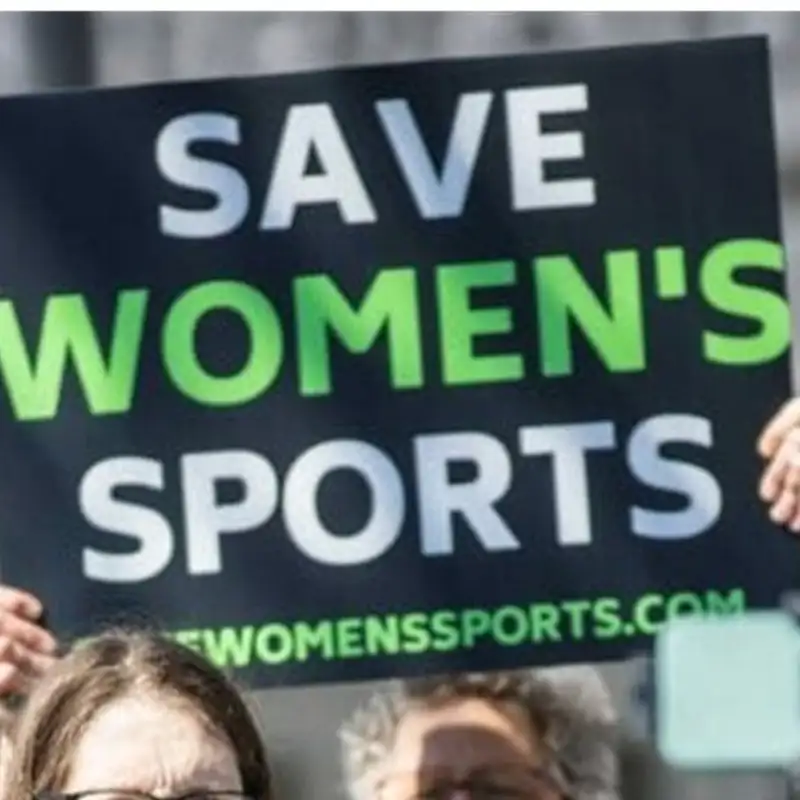
It was like a protest where there was all
these people holding up signs that said
Protect Women's Sports.
And these two women
went up to them and said, “Can
you name five professional women
athletes?” I did see that.
That's phenomenal. Yeah.
And they could not.
Yeah, neither could I.
But I also don't think that I could name
five professional mens athletes.
No, I'm not an athletes
watcher personally, but I love
I love people doing what they want to do.
Yeah. With their bodies.
And they should go do it
and have fun and enjoy watching it.
The question of fairness needs to come
secondary to the question of inclusion.
Duh. The question of fairness
is an important one,
but it is not nearly so important
as how do we make sure that everybody
gets to participate in athletics. Duh.
Well it's duh to us. Yeah.
And so that's something
I'm reflecting on with the ‘how
to apply this in the world,’
because I'm on the cusp of this new book
coming out, ChickenHeart,
and I'm, you know, excited and scared,
but it's yeah, it's I'm going to be
meeting a lot of new people and
having a lot of events and conversations
and maybe facing criticism
and, you know,
being thrown into conversations like this
where trans people are stereotyped
or vilified and whatnot.
And so I'm trying to figure out,
you know, how to be ready for that
in a loving and safe way to myself
and to others.
Yeah.
In an open hearted way,
so that I'm not shutting down
conversation
where it could be useful and expansive.
But also, you know, I can't give bigotry
the time of day all the time.
So I'm going to have to pay
attention to that.
Yeah.
It is not incumbent upon you
to fix the world's most hateful people.
Yeah, it's too tiring.
Right I'm not paid enough to do that. No,
but, you know,
if and where I can,
I want to have open hearted conversations.
Yeah.
And I've got some energy
and capacity for that.
So I want to do that articulately
and intelligently and lovingly.
And I don't know exactly
how I'm going to do that, because...
I think I'm going to steal
what you're saying, because
at Owl Night
I was talking to a climbing friend,
and I told him about what we were going
to be recording on our podcast next.
And he said, “I
think more dialogue about that is good.”
And I jumped right down his throat.
Now, granted, it was 4:30 a.m.
and I had been climbing for 12 hours,
so I am going to give myself
the grace that he gave me.
But when I heard him say, “It's
good for there to be more discussion
of that,” what I heard immediately
was, “This should be open for debate
and and that it is as yet unresolved”
and it was the least generous reading.
I did not meet him with curiosity.
Meeting people with curiosity
and warmth is God like.
There's so much structured
around us to discourage that, you know,
because if people are just, like
challenging you in bad faith all the time,
or like trying to sap your energy
or put you down all the time, then,
or even if that's just not happening
to you with actual interactions,
but you're just inundated with messages
like that all the time, then it makes it
so that you are primed to hear something
innocent or curious as like repeated
talking points from the opposition.
Sure.
And you're on the defense, understandably,
because that that stuff beats you down.
It's exhausting.
So I think a way that I can use
what we talked about today
to act more loving in society
is to take a breath and say,
“What do you mean by that?”
before I start opining intensely.
Although I'm a good, intense opiner
and that's great,
but I don't need to be doing it
all the time.
And I don't know, maybe something
still stuck in a helpful way
through your aggressive opining
or however you called it.
I don't think that he is
critical of trans women in sports,
but he is certainly even less
critical now.
Okay, fabulous.
See doing the good work, Hannah. Yeah,
Go get your copy of ChickenHeart.
Go get your copy of ChickenHeart!
It will warm up your soul.
Thanks. Y'all.
Yeah, yeah, yeah.
Thank you for trekking out to..
I walked 15 miles in the snow.
Thanks for walking.
Both ways Yeah, that's.
[laughter] I love you both very much.
Yes, I love you, too Hannah.
I love you all. Bye bye.